

From 31 March 2026, most UK households especially in England will be required to manage up to four separate bins or containers for their waste under new national standards set by the UK government. This is part of the “Simpler Recycling” initiative, designed to reduce confusion, increase recycling rates, and unify collection practices across different councils. Here’s a breakdown of what’s changing and what you need to prepare for.
What Is the New Four-Bin Requirement?
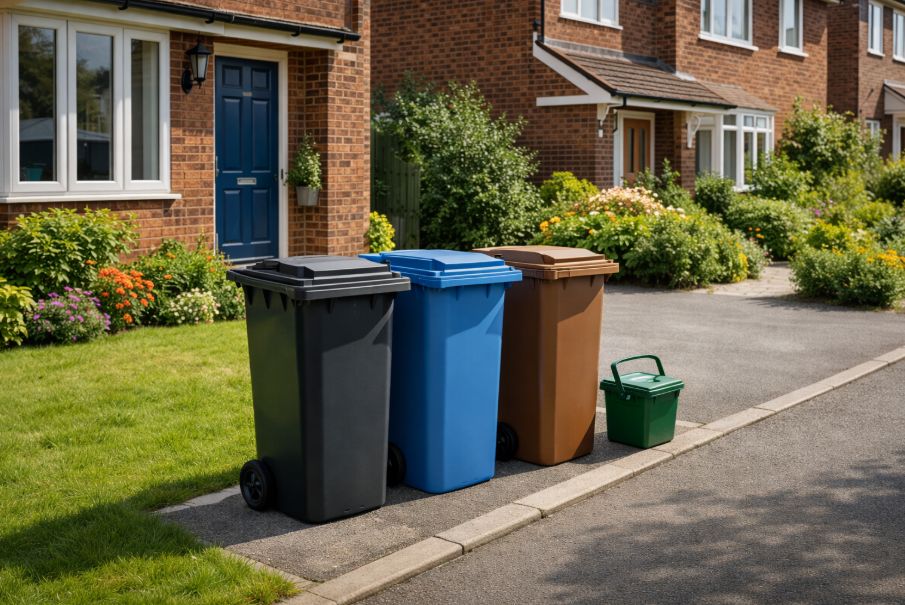
The government’s new waste strategy aims to standardise how recyclable and non-recyclable waste is sorted and collected. The four-bin system includes:
- General Waste Bin: For non-recyclable household rubbish.
- Mixed Dry Recycling Bin: Typically for glass, plastic, metals, and cartons.
- Paper and Cardboard Bin or Bag: For clean, dry paper and card.
- Food Waste Caddies: A small indoor kitchen caddy (5-litre) and a larger outdoor bin (23-litre) for weekly food waste collection.
While garden waste collection remains a fifth option in many areas, it’s handled separately through opt-in, paid subscriptions.
Why Is the Government Mandating More Bins?
The reasoning behind this reform lies in reducing contamination in recycling streams. Currently, many councils use single-bin mixed recycling, but this often leads to recyclable materials being rejected due to cross-contamination.
The new approach requires:
- Greater separation at the source, enabling cleaner, higher-quality recyclables.
- A weekly food waste collection to reduce the amount of biodegradable waste sent to landfills.
- Alignment across all councils, addressing the current patchwork of collection policies.
This change follows the Environment Act 2021, which mandates these steps to ensure that the UK meets its environmental and waste-reduction targets.
You can learn more about the policy’s scope by visiting the official explanation of uk bin recycling rules 2026.
Will Every Household Have the Same Number of Bins?
While the goal is standardisation, exact implementation may vary depending on your local authority and living situation. Here’s how:
- Detached or Semi-Detached Homes: Will likely receive all four containers.
- Flats and Apartment Buildings: Might have shared bins or communal systems, particularly for food waste.
- Rural Areas: Councils may apply some flexibility, especially where certain waste streams (like garden waste) are handled differently.
Despite these variations, the minimum standard requires separate weekly food waste collection and clear separation of dry recyclables.
How Often Will Each Bin Be Collected?
Collection schedules will also see changes to reflect bin types:
| Bin Type | Typical Collection Frequency |
| Food Waste | Weekly |
| Paper/Card | Fortnightly |
| Mixed Dry Recycling | Fortnightly |
| General Rubbish | Every 3 Weeks (some councils) |
| Garden Waste (opt-in) | Fortnightly (seasonal) |
The three-weekly general waste cycle is designed to encourage households to recycle more efficiently and reduce overall landfill contributions.
Will This Increase Bin Clutter?
One of the most common concerns is whether households will now have to accommodate too many bins. In urban areas with limited space, residents have already raised issues about storage, aesthetics, and accessibility.
Some councils are trialling “stackable” bins, split-lid options, or multi-compartment containers to reduce the footprint. However, not all authorities have confirmed solutions yet.
If you live in a flat or multi-occupancy dwelling, landlords or managing agents will typically coordinate shared bin space and collection logistics.
Are There Any Exceptions to These Rules?
Yes. The government has allowed some exceptions based on practicality and efficiency:
- Councils can apply for exemptions if separating materials is not technically or economically practical.
- “Co-mingling” of recyclables (e.g., plastic and glass together) may be allowed with proper sorting at facilities.
- Households with mobility issues or disability access concerns may be eligible for assisted collection services or adapted bins.
Authorities must publish clear justification for any divergence from the core framework.
How Will the 2027 Deposit Return Scheme Impact Bins?
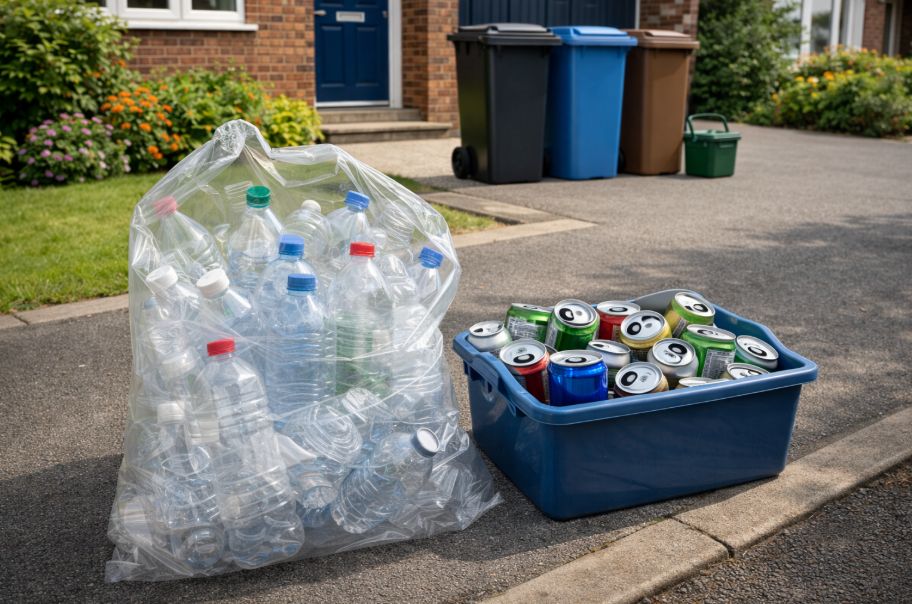
Separate from the 2026 bin changes, a Deposit Return Scheme (DRS) is expected in 2027 across England. This will incentivise consumers to return plastic and metal drinks containers to designated machines or collection points in exchange for a small deposit refund.
This means many drinks bottles and cans may not enter your regular recycling bins at all. Instead, they’ll be processed through a retail-return loop.
The introduction of DRS aims to complement the Simplified Recycling reforms by reducing the volume of containers entering household waste streams.
What Support Will Councils Provide to Households?
To ensure a smooth transition, local councils are expected to:
- Distribute new bins and caddies to all affected households.
- Provide leaflets, instructions, and digital resources about sorting waste.
- Launch public awareness campaigns throughout 2025 and early 2026.
- Offer guidance and support for residents with mobility needs.
Some councils have already begun trialling the new bin formats and adapting depot operations for the upcoming changes.
What Do Residents Think About the Changes?
Public response has been mixed. While many residents support recycling, the idea of managing multiple bins has drawn criticism due to:
- Lack of space in small properties or flats.
- Confusion over sorting rules.
- Concerns over increased fly-tipping if collection frequencies drop.
However, proponents highlight that countries with similar systems (e.g., Wales, Germany) already see much higher recycling rates with less than 10% of waste going to landfill in some regions.
Will This Actually Improve Recycling in the UK?
According to DEFRA, yes. The policy is designed to:
- Increase England’s household recycling rate (which currently lags behind Scotland and Wales).
- Reduce contamination levels that render recyclables unusable.
- Enable more consistent, national-level data about waste habits and outputs.
Early trials suggest that weekly food waste collections alone could halve food waste sent to landfill or incineration.
What Should I Do Now To Prepare?
If you’re a homeowner or tenant, here’s how you can get ready:
- Check your local council’s website for updates on bin rollouts.
- Make space for new containers or caddies.
- Start separating paper/card from other recyclables now to build habit.
- Ask your housing provider about communal bin arrangements (if in a flat).
- Stay informed about uk bin recycling rules 2026 to ensure you’re not caught off guard.
Conclusion
From 2026, managing waste in England will become more structured but also more complex. While this may require lifestyle adjustments, the benefits of higher-quality recycling and national consistency will likely outweigh the initial inconvenience. Councils, households, and property managers will all have roles to play in making the transition successful.


